
It’s November in North Idaho and the cold is settling in. This is when people walk into the garage on a frosty morning and notice daylight under the door, a draft along the sides, or a bedroom over the garage that never quite warms up.
I’m Scott Reynolds. We manufacture garage doors right here in Post Falls and have been doing it since 2010. I get a lot of questions this time of year about garage door insulation and weather seals, so I figured I’d lay out what actually helps, what doesn’t, and when it’s worth spending money.
Why Your Garage Gets So Cold
A garage door is the biggest opening in most homes, and on a lot of older houses it’s a single layer of steel with no insulation behind it. In a North Idaho winter, that thin panel lets cold pour straight into the garage.
That matters more if your garage is attached. The cold garage sits against your house walls, the door into your kitchen or mudroom, and sometimes the floor of a room above. A warmer garage won’t replace your furnace, but it does take some of the strain off those shared walls and rooms.
Start With the Weather Seals
Before you think about a new door, check your seals. They’re the cheapest fix and often the most noticeable one. There are three places to look.
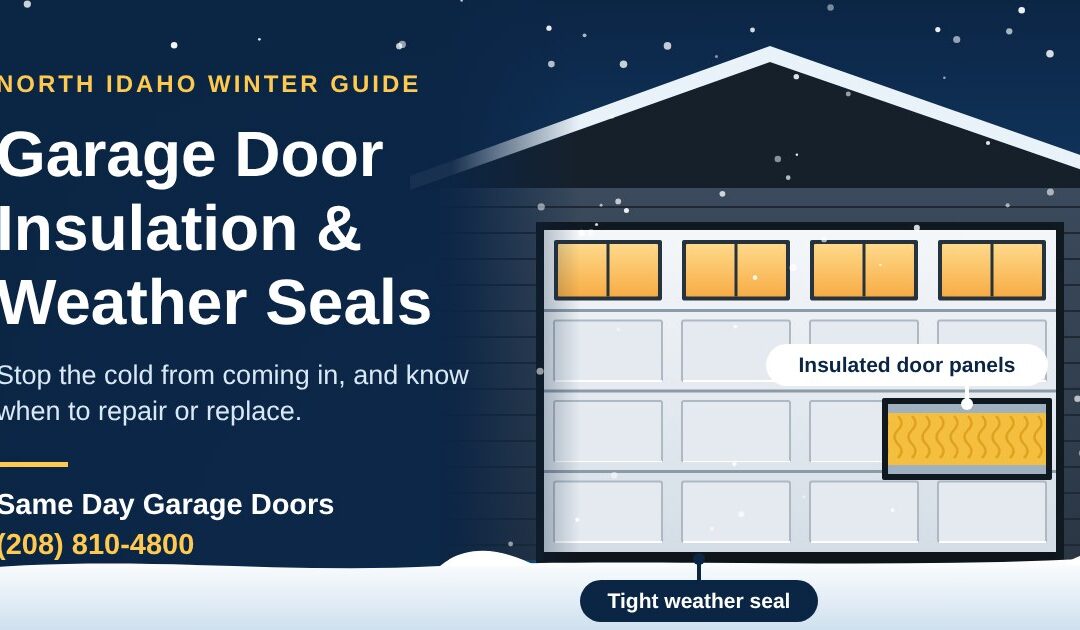
Bottom seal. This is the rubber strip along the bottom edge of the door. Over time it gets stiff, cracks, and stops pressing against the concrete. If you can see daylight under a closed door, cold air, snowmelt, and mice can all get in the same way.
Side and top seals. The strips around the frame should press lightly against the door when it’s closed. Look for gaps, cracked rubber, and sections that have pulled away from the frame.
Seals between panels. Many insulated doors have seals where the sections meet. If yours doesn’t, that’s something to look at when it’s time for a new door.
Here’s a simple test. On a bright day, close the door and turn off the garage lights. Anywhere you see light coming through is a place cold air is coming through too.
What Garage Door Insulation Actually Does
Insulation slows down the cold coming through the door panels. It also tends to make a door quieter and stiffer, which is a nice bonus if you’ve got a bedroom over the garage.
You’ll usually hear about two types. Polystyrene is rigid foam panels fitted into the door sections. Polyurethane is foam injected into the door and bonded to the steel, and it generally gives you a higher R-value for the same thickness. R-value is simply a measure of how well something resists heat loss, and higher is better.
For most homes around here, an insulated steel door is the right balance of cost and performance. If you heat your garage, use it as a shop, or have living space above it, a higher R-value door is usually worth a closer look.
Is an Add-On Insulation Kit Worth It?
It can be. Kits are inexpensive, and on a solid door in good shape they’ll take some of the bite out of the cold. But a kit adds weight, and your springs are set for the weight of the door they’re holding. Add enough and the balance can be thrown off, which puts extra strain on your springs and opener.
A kit also won’t do anything about bad seals, a bent panel, or a door that doesn’t sit square. So fix those first. And if you’re adding weight to the door, have someone check the balance afterward.
Cold Weather Is Hard on the Whole Door
Drafts aren’t the only thing we watch for in the winter. Cold is tough on springs, grease thickens up, and rubber seals can freeze to the floor. If your door is forcing its way open or the opener is straining, stop using it and give us a call rather than forcing it. Pulling a frozen seal loose with the opener can damage the seal or the opener itself.
A broken spring or cable is not a do-it-yourself job. Those parts are under serious tension and can hurt you. Seals and lubrication are fair game for most homeowners. Springs and cables are not.
Repair, Upgrade, or Replace?
Here’s how I’d think about it.
Your door is solid but drafty. Replace the weather seals and get it adjusted so it closes evenly. This is often all you need.
Your door is in good shape but uninsulated, and the garage is only for parking. Seals may be enough. A kit is an option if you want a little more.
Your door is 15 to 20 years old, uninsulated, and having other problems. It’s usually time to start looking at a new insulated garage door instead of putting more money into the old one.
Your door has dents, bent panels, or won’t seal no matter what you adjust. Have someone look at it. Sometimes it’s a simple garage door repair and sometimes the door has reached the end of its life. We’ll tell you which.
What It Costs
A full tune-up and adjustment runs around $150. A new insulated steel door for a typical two-car garage runs about $1,200 to $2,500 installed, and that’s what most people choose. Seal replacement depends on the size of your door and what needs replacing, so we’ll give you a price after we look at it.
If you’d rather not think about any of this each winter, our maintenance plans start at $19 a month for homes. Weather seals, springs, cables, and balance are all part of the checklist on every visit.
Why Local Matters in the Winter
We build doors at our own facility in Post Falls, and we know what this climate does to them. Prairie wind in Hayden, lake moisture in Coeur d’Alene, and below-zero mornings in Rathdrum and Post Falls all wear on a door in different ways. We can help you choose a door and seals that suit where you actually live.
The Bottom Line
If your garage is cold, start with the seals, then look at insulation, and only replace the door if it makes sense. You don’t need to spend more than you have to.
Call us at (208) 810-4800 and we’ll take a look and give you an honest answer. Same Day Garage Doors serves Post Falls, Coeur d’Alene, Hayden, Rathdrum, and the surrounding North Idaho communities.
Recent Comments